Planning nikah and walima stage decoration
By ZS Events, RT Nagar · Updated
A nikah stage is designed around a ceremony with a precise shape — the qazi, witnesses, the two families and often separate seating. Getting the floor plan right before choosing flowers is what makes the day run smoothly and the photos look intentional.
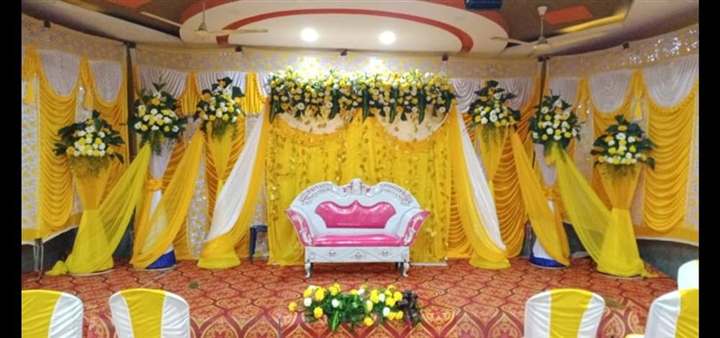
Start with the floor plan, not the backdrop
Decide where the nikah itself takes place, where the bride will be seated before and after, and how guests move between the entrance and the stage. Only then does it make sense to size the backdrop and canopy.
If the family needs separate seating, partitions or floral screens should be part of the design from the first sketch, so they look finished rather than added on the day.
The stage and the couple's seating
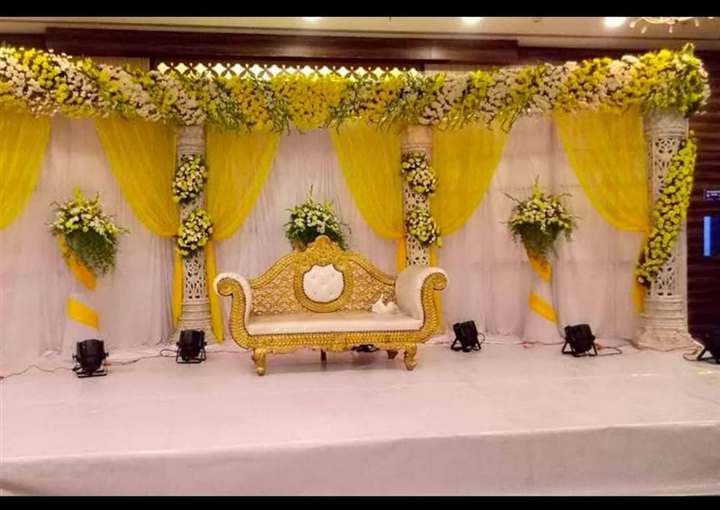
A wide couple sofa, framed by pillars or drape swags and a full floral canopy across the top, is the classic nikah stage. White, ivory and yellow palettes photograph cleanly under shaadi mahal lighting.
The bride's entry
A phoolon ki chadar — a canopy of fresh flowers held over the bride by her brothers — and pathway florals turn the entry into its own moment. Plan where the videographer stands so the walk is filmed cleanly from the front.
Carrying the palette into the walima
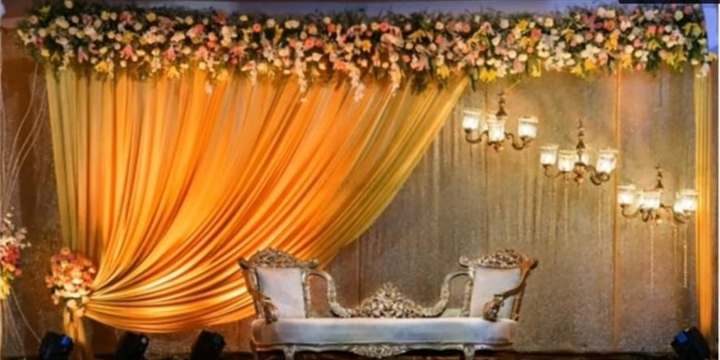
The walima usually follows within days and often in a different hall. Keeping the same colour family while giving the walima a heavier floral stage and warmer lighting makes the two albums feel like one wedding.
Common questions
What colours suit nikah stage decoration?+
White, ivory, gold and soft yellow are the most popular nikah palettes because they photograph cleanly under hall lighting. Blush pink and pastel florals suit an evening nikah or walima.
How early should nikah decoration be booked?+
Book nikah decoration with the rest of the wedding, three to six weeks ahead, and earlier for peak season between November and February.
Planning your own?
Send your date, venue and a reference photo — you'll get a costed proposal.